
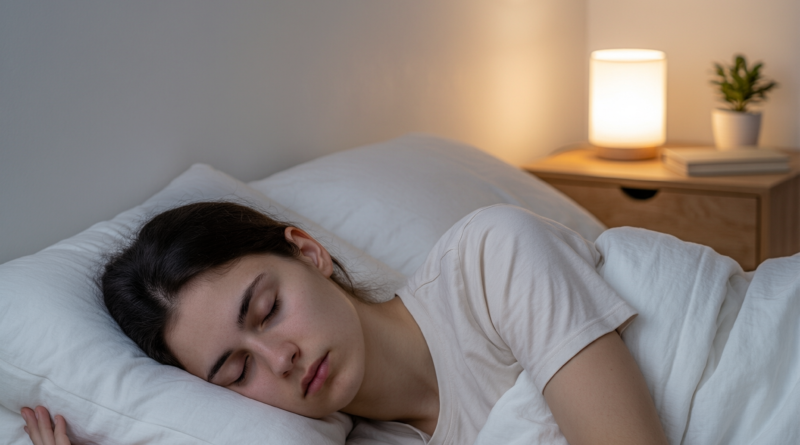
Sleep Quality Over Quantity: Science-Backed Habits for Deep Rest
- 1. Why Sleep Quality Beats Sleep Quantity Every Time
- 2. The Real Culprit Behind Your Tired-But-Wired Feeling
- 3. What Your Brain Actually Does During Deep Sleep (and Why It Can’t Be Skipped)
- 4. Three Bedtime Routine Tweaks Backed by Sleep Science
- 5. The Light Mistake 82% of People Make After Sunset
- 6. How Caffeine Lingers Longer Than You Think — and What to Do Instead
- 7. Common Questions
- 8. Final Thoughts
You’ve probably done this: set the alarm for 6:30 a.m., count backward from eight hours, hit snooze twice anyway, then spend your morning staring blankly at your coffee like it’s supposed to explain something. Here’s the quiet truth no one shouts: sleep quality isn’t just *more important* than quantity — it’s the only thing your brain actually cares about. Six hours of deep, restorative sleep leaves you sharper, calmer, and more resilient than nine hours of light, twitchy, half-awake rest. And no, that’s not opinion. That’s what EEGs show, what cortisol tests confirm, and what every sleep lab on the planet sees when they track real people — not idealized models.
Why Sleep Quality Beats Sleep Quantity Every Time
Sleep isn’t a battery you charge up. It’s a factory shift — with strict, non-negotiable shifts. Stage 3 (deep) sleep is the overnight maintenance crew: scrubbing out beta-amyloid plaques, stitching together memory files, repairing synapses worn thin by daylight thinking. Miss that shift — even once — and your emotional control slips faster than your focus does. A UC Berkeley team found that cutting deep sleep by just 25% for one night made participants 40% more reactive to stress — worse than skipping sleep entirely. So yes, “eight hours” sounds tidy. But if less than 13% of it was deep sleep? Your prefrontal cortex is running on fumes. That’s why better sleep habits start long before bedtime — with timing, light, and temperature, not just willpower.
The Real Culprit Behind Your Tired-But-Wired Feeling
You’re not broken. You’re misaligned. Your body thinks it’s still daytime — because you’ve been sending it daytime signals all evening. That 8:45 p.m. text thread? The bowl of pasta at 9:10? The 7:20 p.m. Peloton class that left you buzzing? All of them tell your suprachiasmatic nucleus — the tiny clock in your hypothalamus — “hold off on melatonin.” So cortisol stays high, melatonin stays low, and your nervous system stays stuck between alert and exhausted. This isn’t insomnia. It’s chronobiological whiplash — and it responds fast to simple fixes. No prescriptions. No trackers. Just three consistent timing adjustments, and most people feel the shift by day five.

What Your Brain Actually Does During Deep Sleep (and Why It Can’t Be Skipped)
Deep sleep is when your brain runs its nightly detox cycle — literally. Cerebrospinal fluid surges through neural tissue like a gentle tide, flushing metabolic waste at nearly double the rate it does while you’re awake. But here’s the catch: that surge only happens when your neurons shrink by about 60%. That shrinkage requires true physiological quiet — zero blue light, zero mental rehearsal, zero background noise louder than a whisper. If your bedroom is lit by a hallway bulb or your head’s replaying tomorrow’s presentation? That cleanup gets postponed. Repeatedly. And over time, that’s how “just tired” turns into brain fog, irritability, and slower recovery from colds. Restorative sleep isn’t passive. It’s active neuro-repair — and it won’t happen unless the conditions are right.
Three Bedtime Routine Tweaks Backed by Sleep Science
Forget the Pinterest-perfect wind-down. Real deep sleep tips are simpler — and far less Instagrammable. First: cool down, not warm up. Take a warm (not hot) shower 90 minutes before bed — then let your core temp drop naturally. That dip triggers melatonin release more reliably than any supplement. Second: stop making decisions 20 minutes before lights-out. No checking emails. No planning dinner. No scrolling TikTok. Fold laundry. Sketch a dumb doodle. Water a plant. Anything low-stimulus and hands-on. That quiets the part of your brain that won’t shut up about deadlines. Third: anchor your bedtime — within 30 minutes — every single night. Even Saturday. A 2023 study showed that sleeping in more than 90 minutes on weekends delayed circadian timing by nearly 50 minutes, slicing deep sleep duration by over a fifth the next week. Consistency isn’t boring. It’s biological leverage.
The Light Mistake 82% of People Make After Sunset
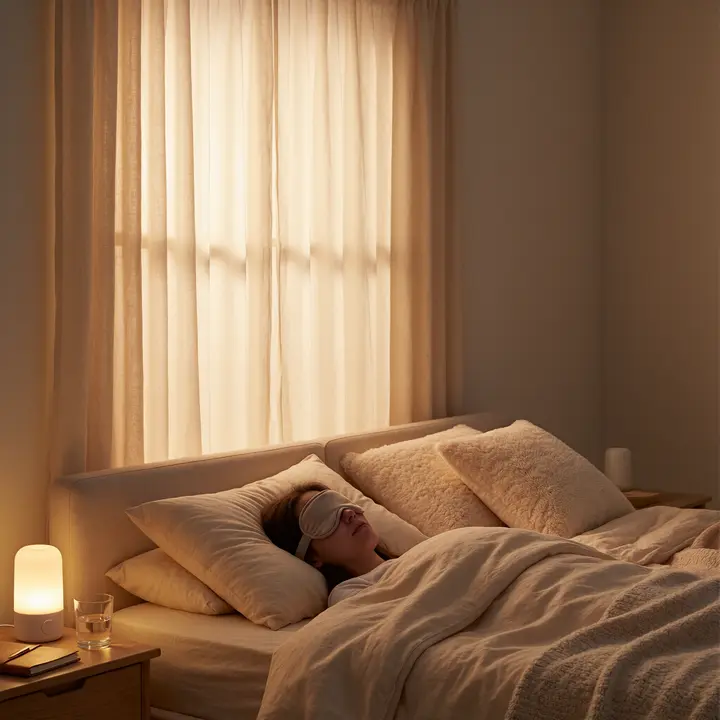
Your eyes don’t care if light feels “soft.” They respond to photons — and even the faintest glow from a hallway fixture can slash melatonin output by 40% in people who are sensitive (which is most of us). You don’t need pitch black — but you do need smart light. Swap white bulbs for warm amber LEDs (2700K or lower) in bedrooms and hallways. Better yet: install motion-sensor path lights that emit only 1–2 lux and shut off after half a minute. And if you absolutely must check your phone after 8:30 p.m.? Slip on amber-lensed glasses 90 minutes before bed — they block the exact wavelength (480nm) that blinds your pineal gland to darkness. This isn’t wellness folklore. It’s photobiology — measured, replicated, and published.
How Caffeine Lingers Longer Than You Think — and What to Do Instead
That 3 p.m. latte? Half of it is still circulating at 9 p.m. But here’s what nobody talks about: a quarter remains active past midnight — quietly stretching the time it takes you to fall into deep sleep and shrinking the total amount you get. Not enough to keep you awake, but enough to dull your focus the next afternoon and make you reach for sugar by 3 p.m. again. So skip the caffeine cutoff myth. Try this instead: cap intake by 1 p.m., and when the slump hits, step outside for 10 minutes of daylight — even on cloudy days. Sunlight boosts alertness *and* strengthens your circadian rhythm, which pays off later as faster sleep onset and longer stretches of restorative sleep. One randomized trial found people who walked outside daily fell asleep 14 minutes sooner and added nearly half an hour of deep sleep each night — no apps, no gadgets, no extra cost.
Common Questions
Can improving sleep hygiene really help with insomnia prevention?
Yes — but only if it’s targeted, not generic. Most chronic insomnia starts as a habit, not a diagnosis. Scrolling in bed. Using the couch as a de facto office. Hitting snooze until your alarm becomes a panic trigger. These condition your brain to associate your bedroom with stress, not rest. Fix the cues — consistent wake-up times, morning light exposure, no screens in bed — and your brain relearns the signal. A 2022 meta-analysis found that people who followed a structured sleep hygiene plan cut their risk of developing chronic insomnia by over two-fifths in a year. That’s more effective long-term than short-term sleep aids — and without the grogginess or dependency.
What’s the difference between ‘healthy sleep’ and just ‘getting enough sleep’?
“Enough” is a number. “Healthy” is a pattern. Healthy sleep means your timing matches your natural rhythm, you hit deep and REM stages consistently, you wake fewer than twice per night, and you feel genuinely restored — not just less exhausted. You can log eight hours and still wake up feeling hollow, foggy, or emotionally raw. That’s not lack of sleep. That’s lack of *restorative* sleep. EEG patterns don’t lie: healthy sleep shows clear, rhythmic slow-wave activity — and you’ll notice it in how quickly your thoughts settle by mid-morning, how steady your mood stays through the day, and whether you actually crave food or just comfort by 4 p.m.
Are deep sleep tips effective for people over 50?
They’re not just effective — they’re essential. After 45, deep sleep declines about 2% per year, and melatonin production drops sharply. That makes environmental control *more* powerful, not less. Cooler room temps (60–63°F), 20 minutes of morning sun (without sunglasses), and strength training three times a week — especially squats and deadlifts — have all been shown to boost deep sleep duration in adults over 55. One study found resistance training increased SWS by over a fifth in just eight weeks. Age changes the baseline — not the playbook.
Final Thoughts
You don’t earn deep sleep. You invite it — by turning down the light, lowering the temperature, quieting the mind, and showing up at the same time, night after night. Better sleep habits aren’t about perfection. They’re about predictability. Your biology thrives on rhythm — not rigidity. Start with one tweak. Then another. Watch how your energy, clarity, and calm begin to shift — not in weeks, but in days. Because restorative sleep isn’t some distant goal. It’s the quiet, daily work of returning to yourself.
“Sleep quality, better sleep habits, deep sleep tips, healthy sleep, sleep hygiene, insomnia prevention, sleep science, bedtime routine, wellness habits, improve sleep, healthy lifestyle, restorative sleep”
“sleep quality, deep sleep, sleep hygiene, bedtime routine, restorative sleep, insomnia prevention, wellness habits”
21