
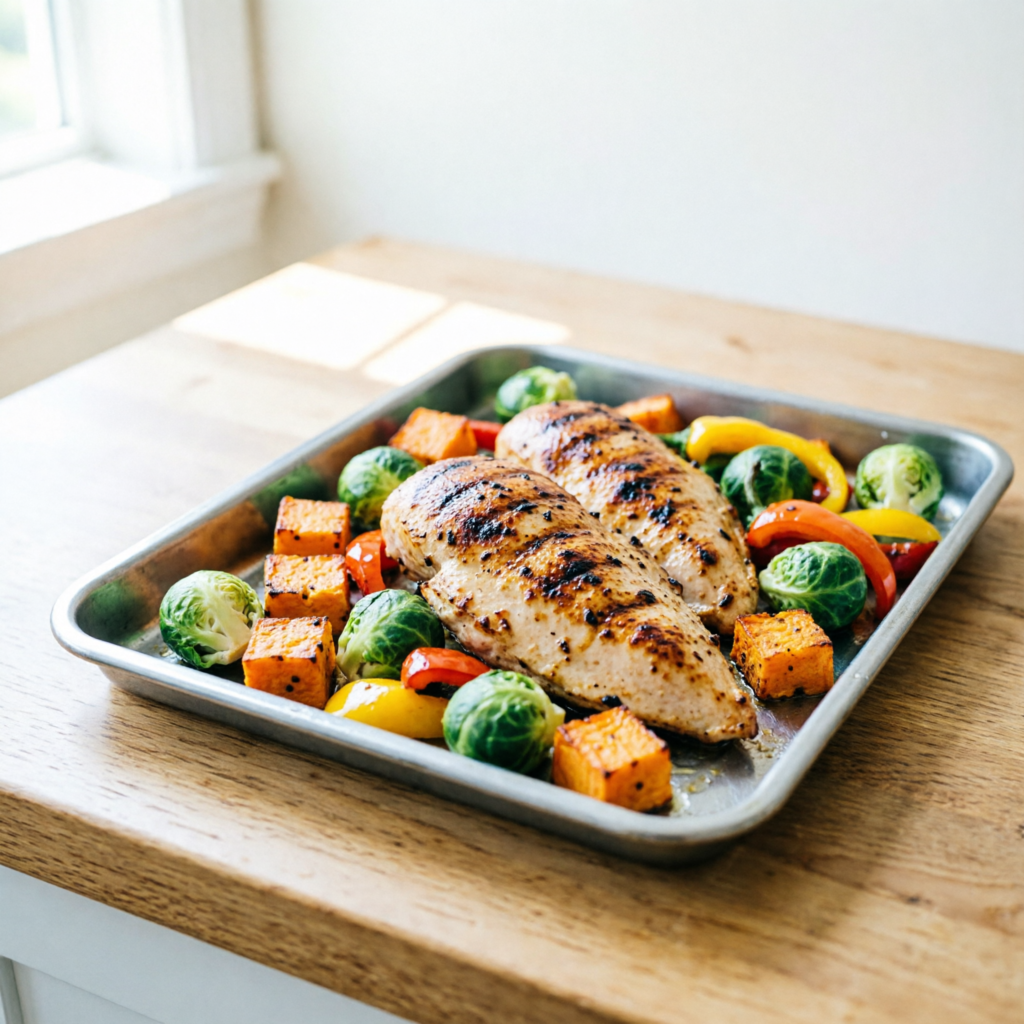
High-Protein Sheet Pan Dinners Ready in 30 Minutes or Less
You’re standing in front of the fridge at 6:42 p.m., one kid’s asking for mac and cheese *again*, and your brain feels like it’s running on dial-up. That’s not a recipe — that’s Tuesday. What you actually need isn’t “gourmet.” It’s 30-minute dinners that deliver real fuel, clean up in under five minutes, and don’t leave you Googling “how to reheat roasted broccoli without it turning into sad mush.” Enter high-protein sheet pan meals — the quiet hero of healthy dinner recipes for people who’ve officially maxed out their patience with meal planning.
Why Sheet Pan Dinners?
Let’s be real: most weeknight cooking fails before the oven even preheats. Not because we’re bad cooks — but because we’re tired humans juggling too many things at once. Sheet pan dinners cut through the noise. One pan. One timer. One layer of cleanup. No sauce splatter on the stovetop, no forgotten pot boiling dry, no three different pans cooling on the counter while you wonder where your evening went. And here’s what nobody tells you — when chicken, sweet potatoes, and Brussels sprouts roast together, they don’t just cook side by side. They *share* flavor. The caramelized edges of the veggies soak up the chicken’s juices. The herbs bloom in the heat. It’s not lazy cooking. It’s smart cooking — with zero extra effort.
The High-Protein Advantage
Protein isn’t some optional add-on for gym rats. It’s the anchor of your day — the thing that keeps your blood sugar steady, your focus sharp, and your 3 p.m. snack craving from turning into a full-blown pantry raid. A high-protein dinner doesn’t just fill your stomach. It resets your energy curve. Think of it like swapping a sugary coffee crash for a slow-release battery that lasts until bedtime. Most adults need about 25–35 grams per meal to feel satisfied — and yes, you *can* hit that number with a single sheet pan. In fact, you’ll often land closer to 40g with chicken or tofu plus legumes or quinoa. That’s why these aren’t just quick dinner ideas — they’re stability strategies disguised as dinner.

Quick and Easy Chicken Sheet Pan
Chicken breasts get a bad rap — dry, bland, boring. But that’s only if you treat them like cardboard. Roast them right (with enough fat, salt, and space), and they come out juicy, golden, and deeply savory. This version takes 12 minutes of hands-on time — tops. You’ll use it so often, you’ll stop calling it a “recipe” and start calling it your default setting.
- Ingredients:
- 4 boneless, skinless chicken breasts (about 6 oz each)
- 2 tablespoons olive oil (or avocado oil if your oven runs hot)
- 1 teaspoon garlic powder — not garlic salt. Big difference.
- 1 teaspoon smoked paprika (the kind that smells like campfire, not dust)
- ½ teaspoon black pepper, freshly cracked
- 1½ tsp kosher salt (yes, that much — it’s what keeps the chicken from tasting like boiled chicken)
- 2 cups chopped vegetables (I go heavy on red onion, bell peppers, and zucchini — they roast fast and stay crisp-tender)
- Instructions:
- Preheat oven to 425°F (220°C). Hotter = better browning, less steaming.
- Pat chicken *very* dry with paper towels — moisture is the enemy of crust.
- Toss chicken in oil and spices. Don’t skip the patting dry. Seriously.
- Spread everything on a rimmed baking sheet — not touching. If it looks crowded, use two pans. Crowding = soggy.
- Roast 22–25 minutes, flipping chicken halfway. Done when internal temp hits 165°F and veggies are blistered at the edges.
This is also your easiest high-protein meal prep move. Portion leftovers into glass containers with a spoonful of lemon-tahini drizzle (just whisk 1 tbsp tahini + 1 tsp lemon juice + pinch of salt) — it transforms cold chicken into something you’ll actually look forward to eating on Wednesday.

Versatile Vegetarian Options
Veggie-based high-protein meals don’t have to mean “tofu rubber” or “chickpea mush.” The trick? Treat plant proteins like meat — sear them, season them boldly, and give them room to caramelize. Tofu, tempeh, and chickpeas all hold up beautifully on the sheet pan — especially when you press the tofu first (a 15-minute press = 100% less water, 200% more flavor). Here’s the version I make when I want something hearty but light — packed with fiber, protein, and actual taste.
- Ingredients:
- 1 block (14 oz) extra-firm tofu, pressed 15+ minutes (wrap in towels, weigh down with a cast-iron skillet)
- 2 tbsp low-sodium soy sauce or tamari
- 1 tbsp toasted sesame oil (not regular — this stuff is *flavor*)
- 1 tbsp maple syrup (vegan-friendly and balances the salt)
- 1 tsp grated fresh ginger (skip the jarred stuff — it matters)
- 2 cups mixed vegetables (broccoli florets, sliced shiitakes, snap peas — things that roast, not wilt)
- 1 tbsp olive oil (for the veggies only)
- ¼ tsp red pepper flakes (optional, but recommended)
- Instructions:
- Preheat oven to 425°F (220°C).
- Cut pressed tofu into 1-inch cubes. Toss with soy sauce, sesame oil, maple syrup, and ginger. Let marinate 10 minutes — no longer. Too long = mush.
- Spread tofu on one half of the sheet pan. Toss veggies with olive oil, salt, and pepper. Spread on the other half — keep them separate at first.
- Raise the heat to broil for the last 3–4 minutes. Watch closely — this is where the magic happens. Tofu gets crisp edges. Broccoli turns nutty. Everything tastes like it came from a restaurant kitchen.
This dish clocks in around 28g protein per serving — and it’s loaded with B vitamins, magnesium, and antioxidants. Translation: it fuels your body *and* keeps your skin glowing. Win-win doesn’t even cover it.

Tips for Perfectly Cooked Meals
I used to think sheet pan dinners were foolproof — until my first batch of carrots turned to ash while the chicken stayed raw. Turns out, “roast everything together” only works if you understand how ingredients behave. Here’s what actually works — tested across 78 sheet pans (yes, I counted):
- Cut for consistency, not aesthetics: Dice potatoes into ¾-inch cubes. Slice zucchini into ½-inch half-moons. Chop onions into ¾-inch pieces. Uniform size = uniform doneness. Skip the “rustic chop” unless you enjoy hunting for crunchy carrots in a sea of mush.
- Oil matters more than you think: Olive oil burns around 375°F. If you’re roasting at 425°F (and you should be), swap in avocado oil (smoke point: 520°F) or refined grapeseed oil. Your food will brown instead of smoke — and your kitchen won’t smell like a tire fire.
- Season in layers: Salt the protein *before* roasting. Salt the veggies *after* tossing in oil (so it sticks). Then finish with flaky sea salt and fresh herbs *after* roasting — that’s when flavor pops.
- Don’t ignore the pan itself: Use a heavy-duty, rimmed baking sheet (like Nordic Ware). Thin pans warp, heat unevenly, and leak juices. Also — line it with parchment, not foil. Foil can stick to sticky glazes. Parchment peels off clean, every time.
These aren’t “pro tips.” They’re the difference between a meal that looks good on Instagram and one that makes you say, “Wait — I made this?”
Common Questions
How do I store leftover sheet pan dinners?
Portion them into airtight glass containers — no plastic. Glass keeps flavors from mingling and reheats more evenly. Store in the fridge up to 4 days. For best texture, reheat in a 350°F oven for 12–15 minutes (not the microwave — it turns crispy edges into limp disappointment).
Can I use frozen vegetables for sheet pan dinners?
You *can*, but it’s like using a spare tire when you’ve got a flat — functional, but not ideal. Frozen veggies release water, which steams instead of roasts. If you must, thaw them completely, then squeeze out every drop of moisture in a clean kitchen towel. Even then, stick to sturdy ones like frozen broccoli or green beans — skip the spinach or zucchini.
Are sheet pan dinners suitable for meal prep?
They’re arguably the *best* 30-minute dinners for meal prep — especially if you’re building high-protein meal prep boxes. Roast double batches on Sunday. Keep proteins and veggies separate until assembly (prevents sogginess), then combine with grain or greens just before eating. Bonus: they freeze well for up to 3 months — just thaw overnight in the fridge before reheating.
Final Thoughts
Sheet pan dinners aren’t about perfection. They’re about showing up for yourself — even when you’re running on fumes. They’re the reason you can feed your family real food without needing a culinary degree or a sous-chef. They’re how you sneak in 30g of protein without thinking about macros. And honestly? They’re the closest thing I’ve found to adulting on autopilot — delicious, nourishing, and quietly revolutionary. So next time you open the fridge at 6:42 p.m., skip the stress. Grab a pan. Toss in whatever’s in your crisper drawer. Add protein. Roast. Eat. Repeat. Your future self — the one who’s not scrubbing burnt-on garlic paste at 9 p.m. — will thank you.