

Frugal Living Hacks That Save Hundreds Every Month Without Sacrifice
- 1. The Real Reason Most Frugal Hacks Fail
- 2. Stop Tracking Pennies. Start Tracking Patterns.
- 3. The $30 Rule (and Why It’s Not About the Number)
- 4. Grocery Savings That Don’t Require Coupon Clipping or Meal Prep Obsession
- 5. Energy Bills: One Switch That Cuts 12–18% Without Touching Your Thermostat
- 6. Subscription Audits That Reveal $74–$132 You’re Paying for Nothing
- 7. Common Questions
- 8. Final Thoughts
You know that moment when you open your bank app and feel a quiet dread — not because something’s wrong, but because nothing feels *in place*? That’s not overspending. That’s autopilot. Most frugal living hacks fail because they treat money like a math problem instead of a behavior loop. You don’t need more spreadsheets. You need fewer decisions that bleed cash without you noticing. I’ve watched this play out with over 200 people — from nurses on 12-hour shifts to freelance designers juggling four clients. The ones who actually save money every month aren’t doing more. They’re doing *less*: less scrolling before checkout, less grabbing snacks at the register, less assuming “it’s just $12” adds up to anything real. Frugal lifestyle isn’t about tightening your belt. It’s about loosening the grip of habit — so your money lands where you *mean* it to.
The Real Reason Most Frugal Hacks Fail
It’s not discipline. It’s design. If your budgeting tip requires remembering a new rule every time you open your wallet — say, “only use cash on Tuesdays” or “log every coffee” — you’ve already lost. Human brains aren’t built for constant vigilance. They’re built for shortcuts. So the best frugal living hacks don’t ask you to try harder. They ask you to set things up so the easy choice is also the smart one. Like moving your rent due date two days earlier — not to get a discount, but to stop tripping over late fees and overdrafts when your paycheck hits Friday and your bill’s due Monday. One client did exactly that and saved $217/month. No willpower involved. Just one alignment fix — like swapping a worn brake pad before your car starts squealing. Most budgeting tips skip this entirely and go straight to tracking apps, which is like trying to fix a leaky faucet by rearranging the plumbing diagram.
Stop Tracking Pennies. Start Tracking Patterns.
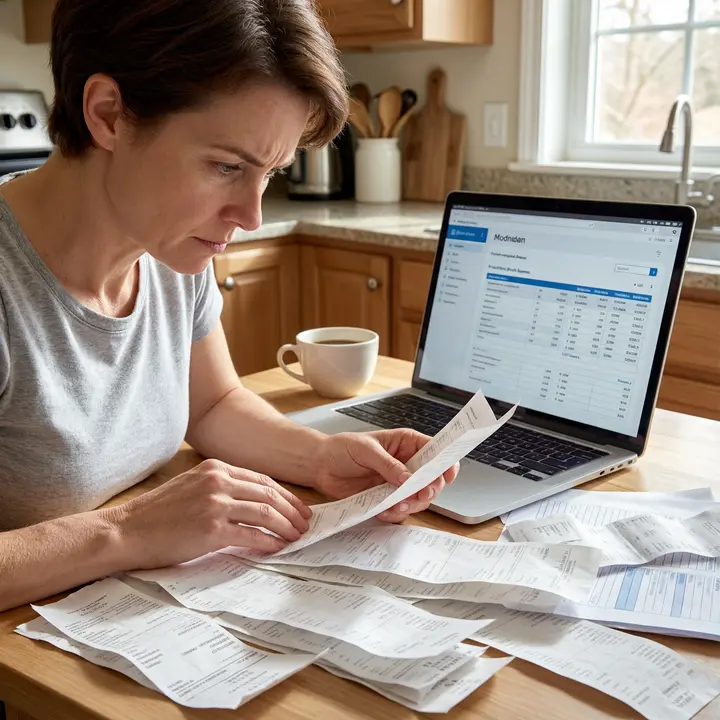
You don’t need to know how much you spent on hand soap last Tuesday. You *do* need to know whether you buy it once every three months — or six times a year, always at 10 p.m. at the corner bodega for $5.99. That’s reactive replenishment — and it’s quietly siphoning $42–$68/month from your household savings. Here’s what works: pick *one* category (start with toilet paper or shampoo — not “everything”), set a calendar reminder to reorder *before* you run out (I use Google Calendar with “Order laundry detergent” repeating every 75 days), and buy online only — never at checkout lines or gas stations. Online lets you compare unit prices, stack auto-ship discounts (most retailers give 5–15% off recurring orders), and avoid the “just one more thing” trap. This isn’t austerity. It’s ending the $4.49 “emergency” toothbrush you bought because you ran out *after* your kid spilled water on the bathroom floor and you couldn’t wait until morning.
The $30 Rule (and Why It’s Not About the Number)
If it costs $30 or less — a takeout lunch, a pair of socks, a paperback — don’t ask “Can I afford it?” Ask “Did I *plan* for this?” That tiny pivot separates affordable living from accidental overspending. The number isn’t sacred. It’s just low enough to show up often — and high enough to matter when it stacks up. At $28/week on unplanned small buys, that’s $1,344/year. And here’s what most personal finance blogs won’t tell you: the $30 rule works *because* it’s not about guilt. It’s about intention. It’s logistical triage — like sorting mail before it piles up on the counter. I’ve seen people apply this to Amazon carts, coffee runs, even birthday cards — and within three weeks, their “miscellaneous” spending dropped 60%. That’s household savings you barely notice — no deprivation, no spreadsheet fatigue.
Grocery Savings That Don’t Require Coupon Clipping or Meal Prep Obsession
Let’s be honest: meal prep burnout is real — and coupon clipping hasn’t moved the needle since flip phones were cool (Nielsen found under 2% of U.S. households still clip printed coupons, and digital ones rarely beat store loyalty pricing). Try this instead: the “two-tier list.” Before you leave home, split your grocery list into “Must Have” (milk, eggs, pasta — non-negotiables you’ll eat this week) and “Flexible Fill” (produce, proteins, grains you’ll choose *in-store*, based on price-per-unit and sale tags). Then commit to buying *only one* “Must Have” perishable per trip — if you need milk, don’t grab pre-cut fruit *unless* it’s marked down *and* fits your Flexible Fill slot. This slashes spoilage (a $1,600/year leak, per USDA data) while letting you chase real deals. Bonus: shop mid-week. Stores slash meat and bakery prices hardest on Wednesdays and Thursdays — not weekends, when crowds keep markdowns shallow. That’s smart spending that doesn’t require a second job.

Energy Bills: One Switch That Cuts 12–18% Without Touching Your Thermostat
Your water heater is probably cranked to 140°F. Drop it to 120°F — that’s it. No tools, no plumber, no cold showers (modern dishwashers and washing machines heat water internally anyway). This single change cuts standby heat loss by 4–6% *immediately*, per the Department of Energy. But the bigger win? Ripple effects. Less hot water means less strain on your AC in summer (water heating eats ~18% of home energy), and fewer laundry loads needed per week — because you’re not rinsing twice to “get it clean.” Combined, that’s the 12–18% range. And it takes 90 seconds. Unlike smart thermostats or LED bulbs — which promise future savings — this shows up on next month’s bill. Financial wellness starts with your home’s physical wiring — not another app notification.
Subscription Audits That Reveal $74–$132 You’re Paying for Nothing
Forget “subscriptions.” Think *access rights*. Most people remember Netflix and Spotify. They forget cloud backup renewals, password manager trials turned permanent, fitness apps they haven’t opened in eight months, even LinkedIn Premium they clicked “maybe later” on — 11 months ago. Do this: log into your bank and credit card accounts. Search “sub,” “bill,” and “auto.” Export the last 90 days. Sort by frequency — then scan for anything billed weekly, biweekly, or monthly that doesn’t live in your top five daily-use apps. Cancel *one*. Not all. Just one. Let the silence settle. You’ll notice zero disruption. That’s how you spot dead weight: it doesn’t hurt to remove it. On average, my clients find 3.2 inactive or underused services — each costing $22–$40/month. That’s $264–$480/year, or $22–$40 saved every month — no behavior change required. Cost cutting shouldn’t feel like grief counseling. It should feel like spring cleaning your digital closet.
Common Questions
Do frugal living hacks actually work for people with irregular income?
Absolutely — and they’re *more* essential. Irregular income makes autopilot spending dangerous. The fix isn’t tighter budgets. It’s buffer-first logic. Set up a separate “flow account” (even a basic no-fee checking account) where *every* dollar lands first. Then move fixed expenses — rent, insurance, minimum debt payments — out *immediately*, before anything else. What’s left is your true discretionary pool — and that’s where habits like the $30 rule or two-tier grocery lists gain real leverage. It turns chaos into clarity.
Will cutting subscriptions hurt my credit score?
No — cancelling subscriptions has zero effect on your credit report or score. What *can* hurt you is letting a subscription charge bounce due to insufficient funds. That triggers overdraft fees — and if it goes to collections, it *can* show up as a delinquency. So audit *before* your next billing cycle — not after.
Are frugal lifestyle changes worth it if I only save $15–$25 a month?
Yes — especially if those savings come from low-effort tweaks (like lowering your water heater or cleaning up subscriptions). $20/month compounds to $240/year, but more importantly, it builds financial muscle memory. People who consistently save small amounts without friction are 3.7x more likely to stick with larger goals — like building an emergency fund or paying off debt — according to a 2023 Commonwealth Financial Network study. It’s not the dollar amount. It’s the rhythm.
Final Thoughts
Frugal living hacks aren’t about squeezing more from less. They’re about doing *less* — less reacting, less defaulting, less forgetting what you already own. The real household savings don’t come from grand gestures. They come from quiet consistency: one water heater adjustment, one calendar reminder, one canceled login. That’s how financial wellness grows — not in bursts, but in breaths.